
Why Hybrid Schooling Is the Future of Education in India?
Online schools incorporate digital tools to build students’ engagement with time-efficient techniques to teach them lifelong skills and academic knowledge. Learning remotely can help students to save hours and make them productive by utilizing the time to study, revise, explore digital applications, and practice language and coding as per instructions. Focusing on students’ social and emotional development through experiential learning. Some of the online schools offer hybrid schooling. Parents who are looking for hybrid schooling options in India should focus on several methods to make the right approach in finding the best online school for them.
In this blog, you will learn about how hybrid schooling is best for your child and how this will shape their learning and empower future education in India. Accessing AI-powered learning platforms for recorded classes and interactive sessions with virtual education and several other benefits is considered for improving a child’s education.
Key Reasons to Choose Hybrid Education
Empowering the students’ future with a flexible learning model for enhancing their knowledge retention, suitable learning resources, and equipping them with diverse learning methods for long-standing challenges in education. Parents can search for a virtual school in India to enroll their child in a suitable curriculum that shapes their further education. Empowering them with technical skills and academic knowledge can help them to thrive in this competitive world. Here are some of the key reasons explained below:
Also Read:- The Future Is Hybrid: Why Blended Learning Is the Next Big Shift in Indian Education
Strategies for addressing the rural-urban education gap
Students who are living in rural areas often lack access to the facilities available for high-quality education. Even students who are residing in semi-urban areas face difficulties with limited resources. Online education imparts valuable knowledge and incorporates effective learning techniques to cultivate students’ skills with defined teaching metrics in a stipulated time. Imparting education all across the country with a globalized approach is considered to develop cross- cultural understanding among the students.
Student Centred Learning Pathways
With a small class strength of 1:20 to teach twenty students in a class with one teacher for each subject, to guide them with effective learning. In live interaction, students’ active listening and communication skills are taught to build engagement and allow them to practice with assignments to track their learning performance. Providing digital content on learning management systems to make it available to each student enrolled in a selected curriculum offered with homeschooling options.
Moreover, hybrid options for lab simulations, co-curricular activities and developing students’ social skills are considered for an improved approach to enhance students’ confidence. The Himalayan School offers hybrid learning options for enhancing students’ social skills, teamwork, and cognitive growth.
Instructional Support and Teacher Efficacy
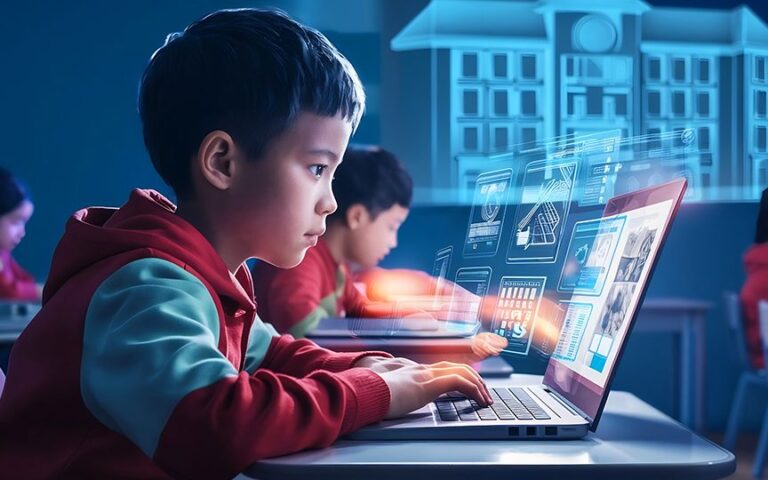
Hybrid schools are empowered with technology to gain data-driven insights about student performance and build the ability to focus on enhancing students’ problem-solving skills and focused learning to enhance their knowledge retention with the activities sessions for improved engagement in online classes and boosting their confidence in building participation in online classes.
Cost-Effective and Scalable: The total cost of attendance of regular school is the most costly for providing quality education. Online schooling minimizes the additional charges of physical infrastructure maintenance, equating education to all, and utilizing the spare time saved by reducing travel time and accommodation with effective time management for revision and doubt session classes. There is a reasonable cost of the internet connectivity, digital tools, and devices to attend the classes with the defined fee structure offered by the online school.
Preparing Students for Tomorrow: These days, digital skills are prominent in educating students with digital literacy and teaching them self-discipline, online collaboration to communicate confidently. Cultivating the acumen that makes them adaptable for their further education to choose the graduation program wisely and be career-ready to select a suitable job with technical proficiency. Focusing on boosting students’ confidence to prepare them with competitive skills.
Education without a Rigid Schedule: Students don’t need to attend classes under a strict schedule to cover the class topics. Instead, they can interact virtually with educators with guided instructions to log in with credentials and explore suggested applications and even prepare their homework to be attentive to the class details and topics to revise without any rigid schedule. Students can access the learning resources 24*7 to study at a convenient time. There are also virtual labs available for students who cannot visit the centre allocated for hybrid learning sessions. Students do not need to compromise in case of bad weather conditions.
ICT – Trained Teachers: Digitally trained teachers are hired to educate students, to guide them in accessing the proposed application, to empower them with advanced techniques and engage them with a variety of learning methods to enhance their knowledge and digital skills. With the AI- incorporated Learning system, a separate session is conducted to guide them to access the class notes and lectures.
Conclusion
Hybrid schooling is best for students’ overall growth for lifelong learning and strengthening their knowledge and skills with digital technology. Finding online school education in India is easy, as the availability of the CBSE- mapped and Cambridge curriculum to educate your child with their learning adaptation and preference for rote memorization and cross-cultural knowledge.